Article: How to Remove Stains from a Dress: A Fabric-Safe, Evidence-Backed Guide
How to Remove Stains from a Dress: A Fabric-Safe, Evidence-Backed Guide
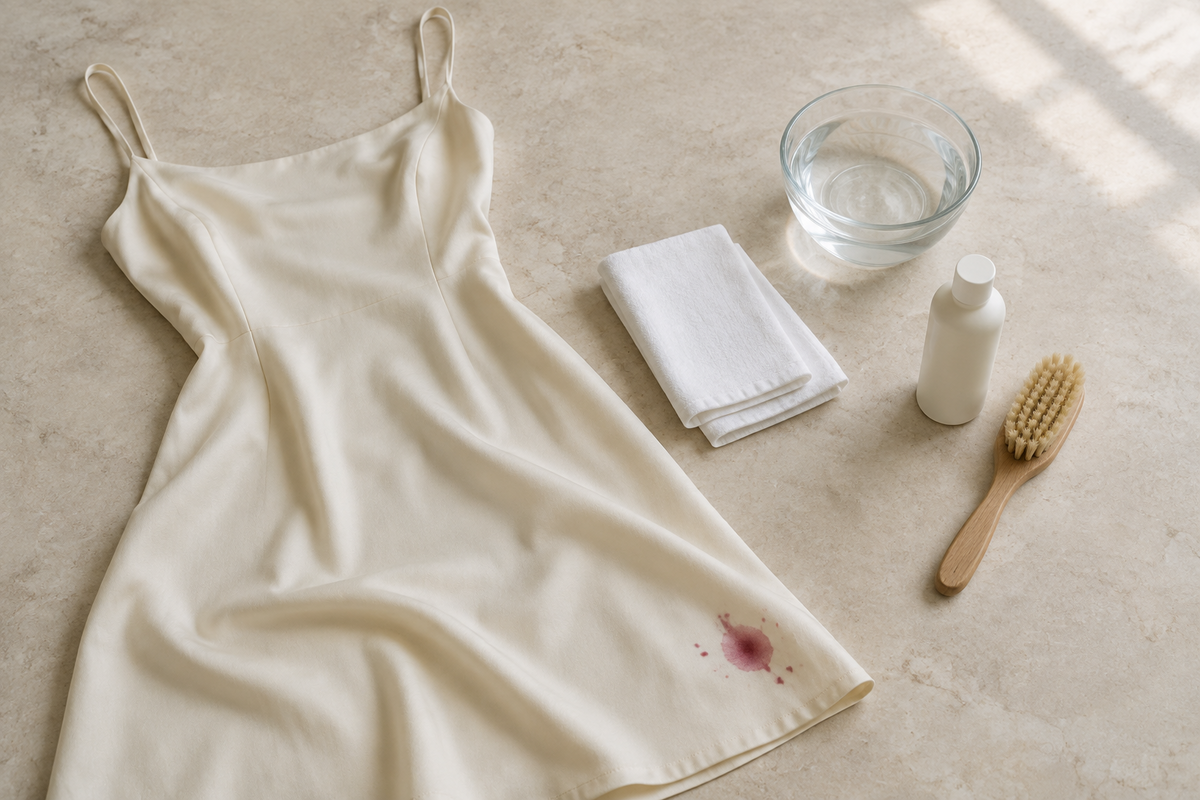
To remove a stain from a dress, check the care label first, lift away any excess and blot gently with a clean white cloth. Choose a treatment that suits both the stain and the fabric, and keep the dress away from a dryer or iron until the mark is gone.
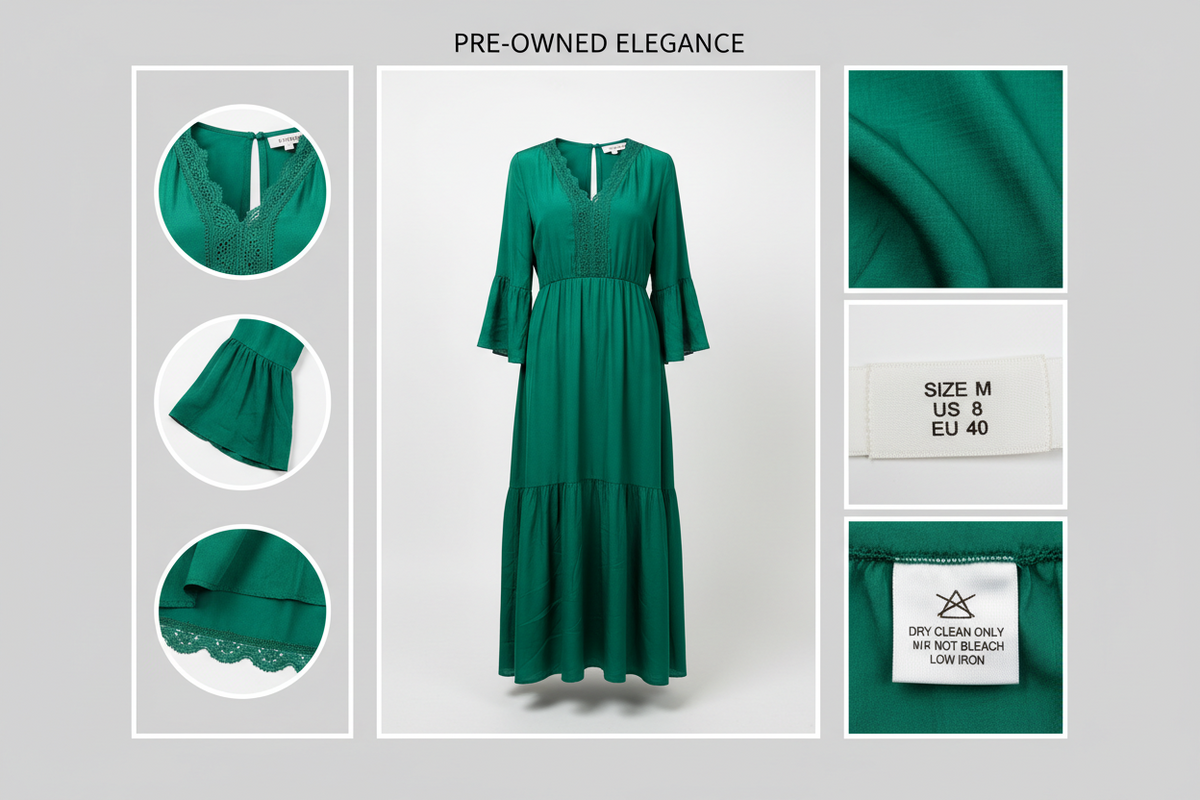
This guide focuses on washable garments. For silk, wool, velvet, delicate embellishments or a dry-clean-only label, ask a professional cleaner before trying an all-purpose stain remover.
What to do in the first few minutes
- Check the label. Identify the fiber, permitted cleaning method and any bleach restrictions.
- Lift, then blot. Use a spoon to lift solids and a white cloth to absorb liquid. Avoid rubbing.
- Protect the other side. Put a clean towel inside the dress so a stain does not transfer through a fitted bodice or skirt.
- Test a hidden area. Follow the treatment label and check for color transfer, texture changes or a ring before treating the visible fabric.
- Pause before drying. Check the result before using heat. Repeat only if the garment and product instructions allow it.

How to treat common dress stains
The American Cleaning Institute’s stain guide recommends prompt treatment, suitable pretreatment and laundering according to the garment label. The steps below apply only when the dress is washable and colorfast.
Red wine, coffee and tea
Blot excess liquid, then rinse the affected area from the back with cool water if the label permits. Apply a compatible liquid detergent or prewash treatment, then launder as directed. If a ring forms or the color transfers, stop and consult a cleaner.
Oil, butter and salad dressing
Lift food residue without smearing it. Pretreat with a laundry detergent or stain remover labeled for greasy marks and the garment’s fabric, then wash as instructed. Inspect in daylight for an oily shadow before drying.
Fresh blood, milk and egg
Use cold water for fresh blood; hot water can set it. A suitable enzyme pretreatment can help with protein stains on washable fabrics. Do not assume an enzyme product is suitable for silk or wool—follow the garment and product labels.
Foundation, lipstick and mascara
Lift excess makeup with a spoon or a clean edge, rather than wiping it across the neckline. Use a fabric-compatible pretreater and wash according to the care label. If pigment remains, do not keep increasing the dose or scrubbing the surface.
Ink and unknown marks
Ink treatments depend on both the ink and the fabric. On a valuable dress, an unknown mark is a good reason to ask a professional cleaner. Tell them what happened and which products, if any, have already touched the fabric.
Stain-removal products: what the evidence actually shows
In its September 24, 2026 comparison, Consumer Reports tested eight store-bought treatments and one DIY mixture against 11 set-in stains on white cotton, using photographs and colorimeter measurements. Those conditions matter: a result on cotton is not proof that a product is suitable for a silk gown.
OxiClean Max Force Laundry Stain Remover Spray
Consumer Reports’ detergent buying guide describes a separate six-pretreater comparison in which Max Force was the only spray to outperform a high-performing liquid detergent used directly on the stain. That makes it an evidence-backed option to consider for suitable washable garments, rather than a universal dress-cleaning solution.
OxiClean’s directions say to patch-test first and exclude silk, wool, leather and dry-clean-only fabrics. The label allows five minutes to one week before washing, depending on the stain, but limits contact to five minutes for fabrics prone to color change. Always follow the current bottle and garment labels.
A concentrated liquid laundry detergent
The same Consumer Reports guidance notes that a high-performing liquid detergent can match or beat several dedicated spray pretreaters. Start with a detergent already compatible with your washable dress, using the amount and contact time on its label. More product does not automatically mean a better result.
Product mentions are editorial, not a promise of complete stain removal. Formulas can change; check the current label before use.
When a dress needs professional cleaning
Choose specialist help for a dry-clean-only label, unfamiliar fibers, unstable dyes, vintage pieces, elaborate beading or a large stain. Tell the cleaner the stain’s likely cause and when it happened. Photograph the care label so you can refer to it later.
Wool requires its own approach: Woolmark’s care guidance uses fabric-specific methods and Woolmark-approved detergents. Do not substitute an all-purpose laundry spray simply because it worked on another garment.
A practical stain kit for an evening out
Pack two small white cotton cloths and a sealable bag. Blot a spill with one cloth and keep the damp cloth separate from the rest of your handbag. Record what was spilled before you forget; that detail is often more useful to a cleaner than a last-minute home remedy.
At home, keep the dress separate from other laundry until you have checked the label. Treat one small area at a time and avoid layering unrelated products.
Never mix bleach with other cleaners. The CDC warns that these mixtures can release dangerous vapors. Follow product ventilation and handling instructions.
Frequently asked questions
Can I remove a stain after the dress has dried?
Sometimes, but complete removal is not guaranteed. Avoid repeated aggressive treatment on a delicate garment. A cleaner can assess whether another attempt is appropriate.
Can I use OxiClean Max Force on a silk dress?
No. The manufacturer excludes silk, wool, leather and dry-clean-only fabrics. Ask a cleaner about a method suitable for the specific dress.
Should I use hot water on every stain?
No. Water temperature depends on the fabric, stain and treatment. Fresh blood needs cold water; otherwise follow the garment and product directions.
What if I do not know what the stain is?
Blot any remaining moisture, avoid experimental mixtures and take the dress to a cleaner with its care-label information.
Care for the pieces you love
For more help choosing and caring for a secondhand find, read our pre-owned designer dress buying guide and Condition Guide. Ready to discover your next piece? Browse designer dresses or explore new arrivals.